We all know that there are costs associated with employee turnover – reduced productivity, increased stress on remaining team members, loss of organizational understanding, time devoted to interviewing and onboarding replacements, etc. – but other than fees for job boards and recruitment services, those “costs” never require you to make a payment. The losses are in work not getting done and income not being realized, not in money leaving your bank account.
But what if that changed? What if every time a Team Member leaves you had to sit down and write a check? $2500 for lost productivity until a replacement is found and brought up to speed. $1500 for the customers who start to go someplace else because they’re no longer greeted by name when they come through the door. $5000 for the employee who is looking for another job because they are now trying to do the work of two people.
Would you start to pay closer attention to Team Members’ Engagement and Morale? Would you start to have more frequent conversations about career goals and opportunities? Would you (could you?) put more effort into getting to know your Team Members and building real relationships with them?
If your electric bill goes up, you immediately start to look for ways to reduce it. If the costs of repairing and replacing equipment get too high, you look at improving your care and maintenance programs. You shouldn’t have to receive an invoice for “Cost of Jill Leaving” to begin to look at turnover the same way.
For Leadership Development Workshops to be successful you need to start with great content. But great content is just that, the start.
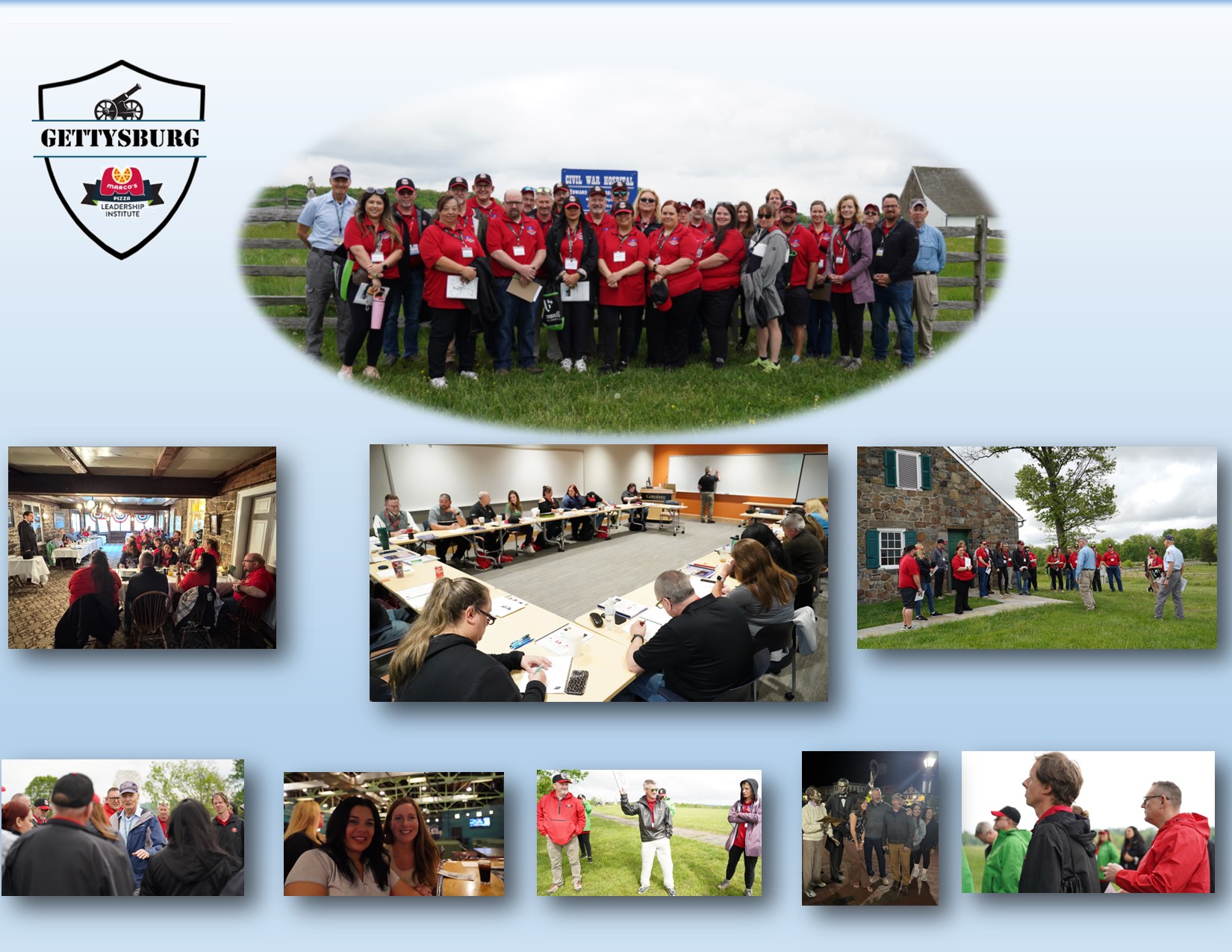
The foundation of the Annual Marco’s Leadership Institute Gettysburg Workshop is the world-class content and experience provided by Diamond6 Leadership & Strategy. Following their model of “Learning from the past to prepare for the future”, participants are presented with the events of July 1863 and then asked to examine and apply the modern day leadership lessons based upon that history. They experience that learning in one of the most historic and important settings in the United States… the impact of Lincoln’s Gettysburg Address is multiplied ten fold when you are standing within yards of where the Address was delivered.
But as I said, the Battlefield component of the workshop is the foundation.
Leadership Development should also be an “experience”. To paraphrase one of my favorite authors, Priya Parker, a chance “to ‘Gather’, to create meaningful and memorable experiences.”
The MLI Gettysburg Workshop is purposefully designed to bring together a diverse group of individuals – Franchisees, Marco’s Pizza (Marco’s Franchising, LLC) Team Members and Senior Leadership, and Business Partners – and provide them with the opportunity to get to know, and to better understand, one another. The fact that they are doing that relationship building (and hopefully having fun) in some incredible venues and locations only adds to the experience.
Finally, the ultimate value of any leadership development workshop or program is measured by what happens after the event; putting education into action.
MLI Gettysburg Workshop Participants spend a full day working on how they will apply the lessons that they learned on the Battlefield. They focus on self-awareness through the use of the Predictive Index and Emotional Intelligence and Leadership Style assessments, increase organizational and Team awareness through structured analysis, and finally, using the Logic Outcome Model, begin to develop both Organizational and Personal Strategic Visions.
We packed a lot into 3 days, but we’re confident that the participants had an experience that will take them to the next level on their Leadership Development journeys, fulfilling our Mission of “Inspiring the Passion and Potential within others to contribute to the Greater Good.”
One of the most often asked questions: What’s the difference between Leadership and Management?
If I’m in a rush, the answer is, “Management gets you through today; Leadership gets you to tomorrow.”
It’s quick, it’s concise, and it isn’t wrong.
Leadership is about creating and communicating a strategic vision. It’s about putting together, and sustaining, a team that will be productive for the long haul. It’s about nurturing a curiosity that will insure you organization is riding the wave, not getting wiped out by it. Ultimately, Leadership is about the future.
Management on the other had is primarily focused on day-to-day and week-to-week results. It’s about scheduling and production and controlling costs. Management provides the solid business operations that make planning for the future possible.
What makes the Leadership vs. Management question tricky is that when it comes to individuals, there often isn’t a clear line between the two: Most Leaders have solid Management skills and most Managers, especially the very effective ones, have strong Leadership skills. The most important distinction is where they focus the majority of their time and energy. A strong Leader can’t ignore day-to-day operations but they can’t become so bogged down in the “now” that they aren’t building for the future. Similarly, a strong Manager needs to be able to think long-term but they can’t spend so much time doing so that day-to-day operations slip.
A much more detailed explanation from one of my favorite authors/thinkers:
Back in the spring the Marco’s Leadership Institute hosted a 1/2 day virtual Business Acumen workshop. During one of the breaks, the facilitators commented on how much fun our group was having – there was joking and teasing about which team was going to “win” and, in general, we were having a good time – and how much fun we were to work with.
In the 30 + years that I’ve been involved with leadership development, I have always believed that because the responsibilities of leadership are incredibly serious, and that leadership development is something “extra” that we’re asking people to add to their already busy lives, the experience of leadership development should be, as much as possible, fun. I really don’t understand not making that a goal.
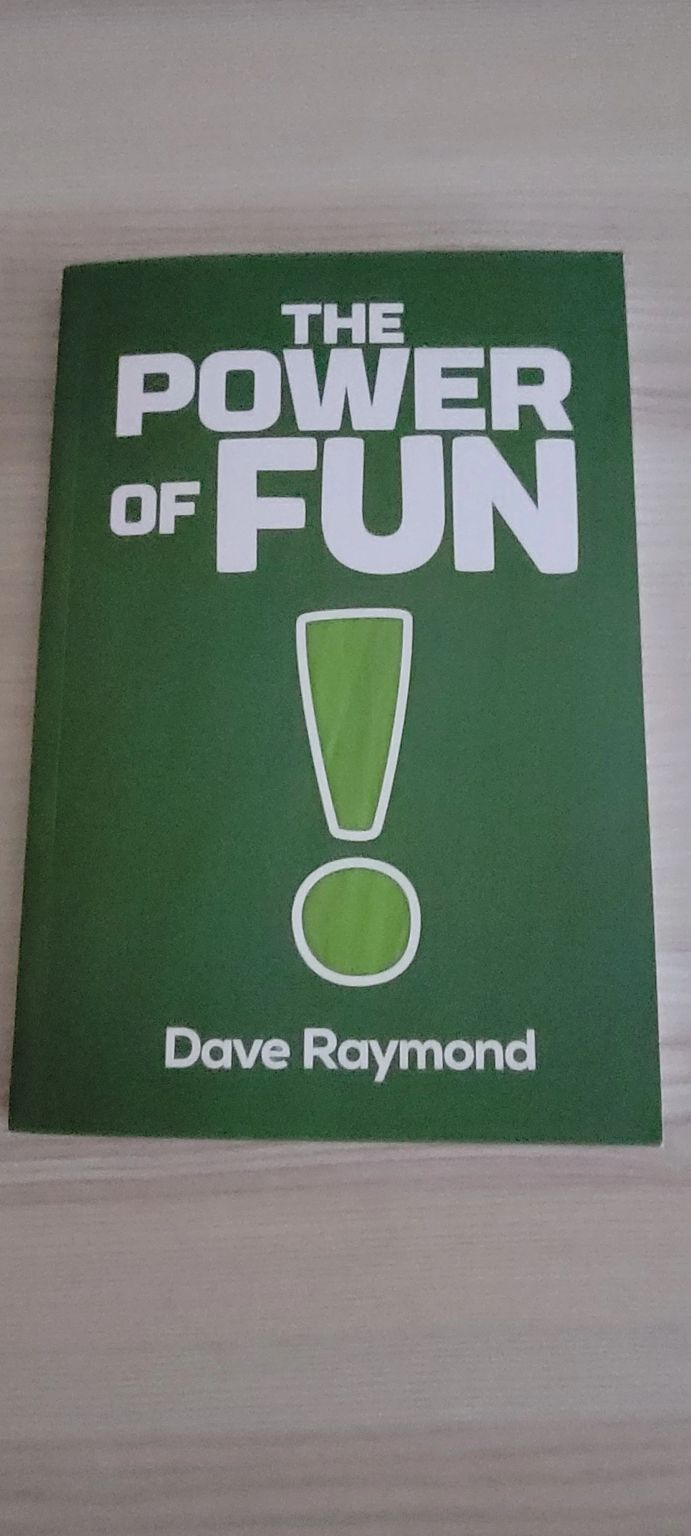
Purely by coincidence, at about the same time as the workshop, my wife Cheri Rinehart had given me her copy of Dave Raymond ‘s book “The Power of Fun!” (Dave had spoken at PACHC’s Annual Conference; she knew I’d enjoy the message and, as a Philly sports fan, the Phanatic stories.) In addition to being a great read, it drove home the importance of making FUN a priority!
“…leadership and management are two distinctive and complementary systems of action. Each has its own function and characteristic activities. Both are necessary for success in an increasingly complex and volatile business environment.”
“What’s crucial about a vision is not its originality but how well it serves the interests of important constituencies—customers, stockholders, employees—and how easily it can be translated into a realistic competitive strategy.”
Those who know me won’t be surprised that I’m not a big proponent of New Year’s Resolutions.
It’s not that I don’t believe that eating healthier, exercising more, quitting smoking, etc. aren’t good things – they absolutely are – it’s just that taking them on as part of a grand “New Year, New Me” plan is fraught with obstacles and opportunities to feel dejected about your progress. In fact, the challenges are so large that one study found that 23% of people who make New Year’s Resolutions abandon them by the end of the first week and almost half have given up on them by the end of January.
So, with that in mind, I’m not going to suggest you make resolutions for 2024. Instead, I’m going to strongly encourage you (just short of begging) to make a personal/professional development “To Do” list. The biggest difference is that I don’t care if you start crossing the items off on January 1st. You can start today, or you can start 6 months from now; the most important thing is that you start.
Increase Your Professional Skills
Pick one skill that would benefit you in your current job, or get you ready for your next position, and make a plan to improve it. Is there a software program that you wish you were better at using? Would your work life be easier if you had a better understanding of finance and accounting? Identify something that you would like to be better at and start working on it.
Learn Something New… Just For Fun
Flower arranging. Woodworking. Playing the guitar. Learning a new language. What’s that “thing” that you’ve always wanted to learn how to do? Sign up for a class, watch some videos, ask someone to teach you. Learning fires up different parts of the brain (combining it with a skill that requires physical activity is even better) and developing new skills creates a sense of accomplishment and confidence.
Do Something Selfless
Volunteer at your local food bank or library. Help your elderly neighbor with their yardwork. Find something to do for others that is meaningful to you. Kindness creates a sense of belonging and purpose and makes the world a better place. As an added bonus, volunteering is a proven way to build your personal and professional networks and develop leadership skills.
Do Something Selfish
Make time to take care of yourself. It doesn’t have to be a lot of time, and often it can’t be. Even if it’s just 15 minutes for a walk, or to listen to your favorite music, or to really enjoy your lunch, make sure you are devoting time to you.
Focus on Relationships
Strong relationships are the foundation of both personal and professional well-being. No one can be, or should be, expected to do everything on their own. I’m not talking about “networking” but about developing stronger relationships based upon really understanding who the other person is. Over the next few months, identify at least one person from each of the following groups and make an effort to improve/develop the relationship you have with them.
Someone in your life that you’d like to have a stronger relationship with. The team member, boss, customer, whoever, that you’d like to know better.
A new relationship. A mentor or coach. The new neighbor. Someone from a different industry, community or social circle who will help you broaden your view of the world.
Someone you want to reconnect with. A former friend, coworker, or classmate who you’ve lost touch with but who still puts a smile on your face when you think about them.
A couple of final thoughts…
Take some time to think about what you’d like your life to look like a year from now. The journey is much easier if you have an idea of where you want to go.
Progress is progress. Starting the items on the above list can be even more important than completing them.
I worked with a recruiter who always said that starting a new job should “feel like your birthday”. But far too often, we take the excitement and energy that comes with starting a new position and turn it into a stack of forms and a cursory introduction to your co-workers before jumping into the to-do list.
Successful onboarding, the kind that maintains that excitement and turns it into long-term engagement, takes a plan that goes well beyond the first day or week.
In this article from the Association for Talent Development, Andrew Joly lays out what a great Onboarding Plan should include.
Confusing the “Cost” with the “Investment” of Recognizing and Rewarding Team Members
For several years I had the honor of attending the Length of Service Recognition Dinner for a non-profit that, for a whole host of reasons, I think sets the Gold Standard for Organizational Excellence.
Their general guideline was to spend $100/year of service for gifts for the employees who were being recognized: 1 year = $100, 5 years = $500, 10 years = $1000, etc.
Whenever I would tell that story, especially when working with other non-profit organizations on identifying ways to reward and recognize their employees, the response was almost always the same; “It must be nice to have that kind of money to throw around. We could never afford to do that.”
Then I would break down the numbers…
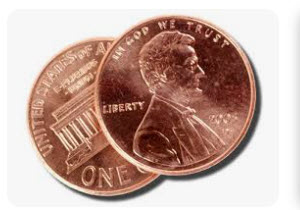
$100/ year = $2 / week = 40 cents / day = 5 cents / hour!
Five cents per hour to say “thank you” to your most dedicated team members and recognize them for their commitment.
But more important than the cost of the gifts was how they were selected. The CEO would personally select, and in many cases shop for, the gifts based upon what she knew about the individual. The Elvis fan got a weekend trip to Memphis. The fishing fanatic was given a chartered fishing trip that included his family. The doll collector received a custom ordered, one-of-a-kind, hand made doll. The gifts weren’t special because of the cost; the gifts were special because they reflected how much the CEO knew and cared about her team members. (Compare that to my wife’s former employer who for her 15th anniversary sent her a catalogue with instructions to pick anything from pages 32 to 37. The globe she decided on is beautiful, but there isn’t anything “personal” or, for the most part, “meaningful” about it.)
So, forgetting about the “cost” (at least for the moment) what can you do to show your team members how much you “value” them? More flexibility in scheduling? Surprising them with lunch? Replacing the generic Big Box Store gift card with one to their favorite restaurant? Or, as crazy as it sounds, budgeting the extra 5 cents per hour and taking the time to get them something that shows you know them and value their contributions?
Several years ago I was reading a book on effectively delivering your message and two key points jumped out, and stuck:
1> Every time you present you should be “acting”. You’re not being fake or even necessarily performing, but you are acting as the best version of yourself for what the situation and the audience requires.
2> Every time you communicate with someone you are “presenting”, whether it is from a stage to hundreds of people or one-on-one at the coffee machine (or over Zoom.)
In her latest newsletter, award winning speaker and author Bridgette McGowen explains how to apply her presentation approach to what is probably the predominate thing on every leader’s calendar – the recurring meeting.





 Marco's Leadership Institute